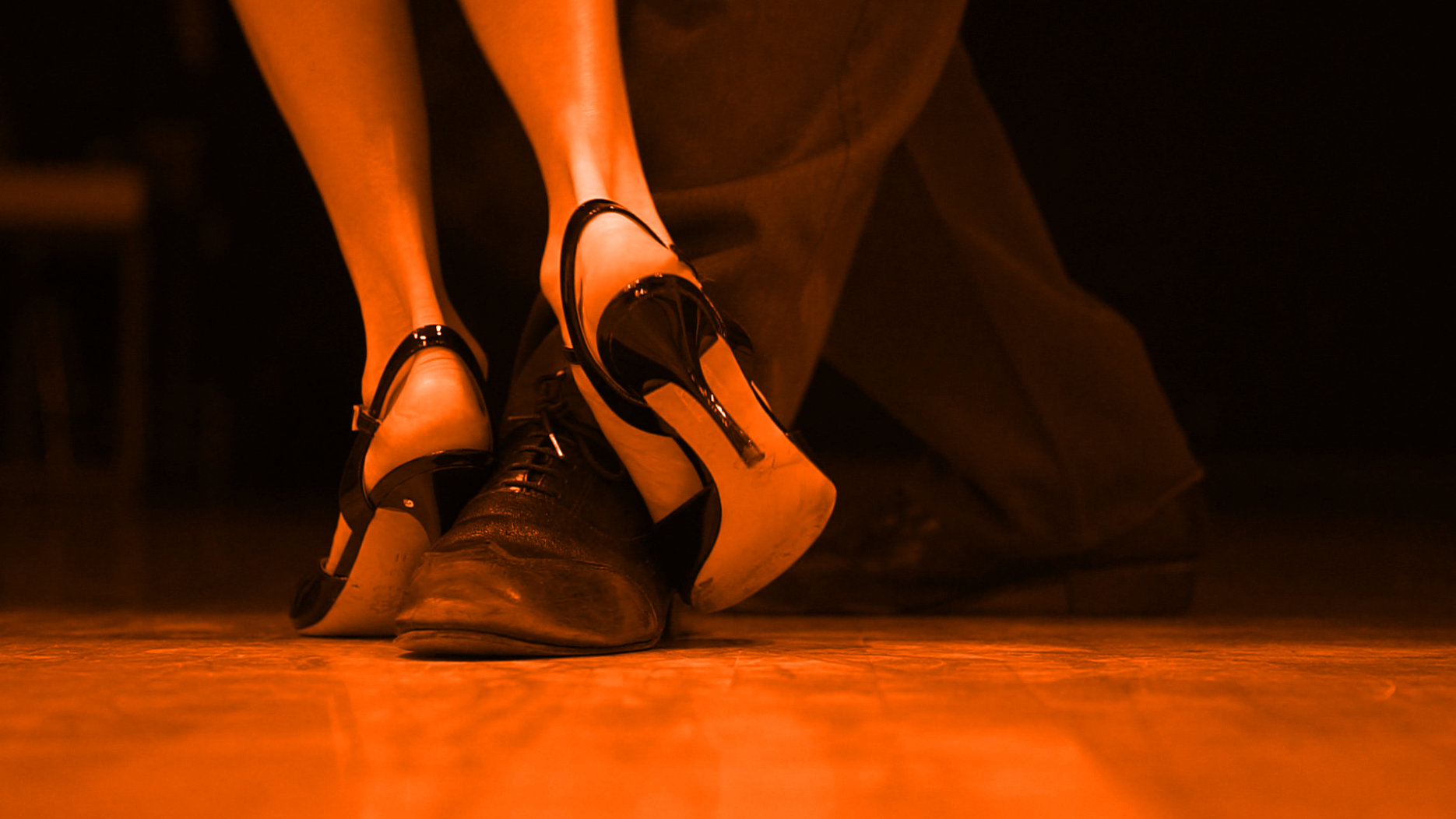
We Teach Tango for Life, Not Just for Dance
Most people come to tango thinking they are here to learn steps.
They expect patterns, technique, perhaps a little romance or musicality. And while tango certainly contains all of that, those things alone do not explain why tango is so challenging, so exposing, or so transformative for people who stay with it.
At its core, tango is not about choreography.
It is about how you meet another person while remaining yourself.
That is why tango matters far beyond the dance floor.
Tango Is a Relational Medium
Tango places two people in close proximity, moving together, making moment-to-moment decisions without a script. There is no room to hide behind theory or performance for long.
The dance immediately reveals:
- How you respond to pressure
- How you manage attention
- How you deal with uncertainty
- How you negotiate influence and autonomy
Do you brace when something is unclear?
Do you collapse to accommodate?
Do you over-effort to feel safe?
Do you withdraw when things get complex?
These are not "dance problems."
They are human patterns.
Tango does not create them, it exposes them.
Presence in the Face of the Other
The central skill tango demands is not strength, flexibility, or memorization.
It is presence.
Presence means:
- Staying organized while being influenced
- Remaining available without losing clarity
- Listening without disappearing
- Acting without forcing
This is extraordinarily difficult.
Most of us learned early that relationship requires either effort or protection. We push, we perform, we harden, or we give up parts of ourselves in order to stay connected.
Tango asks something more subtle and more mature:
Can you stay with yourself and with another person at the same time?
That question applies just as much to partnership, work, conflict, leadership, and intimacy as it does to dance.
Tango Is the Medium, Not the Point
At this school, tango is not treated as an end in itself.
Tango is a medium. It is a structured, precise, social environment in which we practice relational presence. The dance is valuable because it is unforgiving of shortcuts. You cannot think your way through it. You cannot fake listening. You cannot override physics or another nervous system.
If your primary goal is to collect steps quickly, there are faster paths.
If your goal is to understand how you move through the world in relationship, (and to develop more ease, clarity, and responsiveness) tango is unparalleled.
Our Somatic Orientation
Our teaching is grounded in somatic education. That means we prioritize:
- Quality of attention over effort
- Organization before action
- Responsiveness over control
- Relationship over display
We work slowly and precisely, not because we lack ambition, but because depth requires time. We are interested in how you use yourself while moving, not just what you execute.
When your use changes, the dance changes.
When the dance changes, your relationships change.
This is practical work. It is embodied. And it is learnable.
Why This Matters Beyond the Dance Floor
We live in a world that rewards speed, certainty, and performance. Very few places invite us to practice staying present inside real, unscripted interaction.
Tango does.
Week after week, it offers a simple but demanding question:
How do I meet another human being without force, collapse, or withdrawal?
That question is worth practicing.
Not for tango's sake—but for life's.
Sharing the art of Argentine tango in Salt Lake City since 2019.