The Social Practice of Tango
The Social World: Milongas & Etiquette

Tango lives in social spaces called milongas. Understanding how they work removes much of the anxiety new dancers feel.
A milonga is not a party and not a class. It is a shared social environment with simple conventions that help everyone enjoy dancing together.
Some basics:
- •Dances happen in sets called tandas
- •Music pauses briefly between tandas (cortinas)
- •You usually dance multiple songs with the same partner
- •The dance floor is shared and navigated collectively
- •Courtesy and awareness matter more than skill
You are not expected to be good. You are expected to be attentive.
If you are unsure how something works, you are not doing it wrong—you are learning a culture.
The Music: Tango, Vals, Milonga
Tango is danced to three related musical forms:
- •Tango
- •Vals
- •Milonga
Each has a different feeling, rhythm, and emotional tone.
As a beginner, you do not need to analyze the music. Your job is to listen repeatedly until your body begins to recognize patterns on its own.
We recommend:
- •Listening while walking
- •Listening without dancing
- •Letting familiarity grow slowly
Musicality develops through exposure, not instruction alone.
Practicalities: Shoes, Clothing & Comfort
You do not need special clothing to begin tango.
What matters:
- •Stability
- •Comfort
- •The ability to pivot without gripping the floor
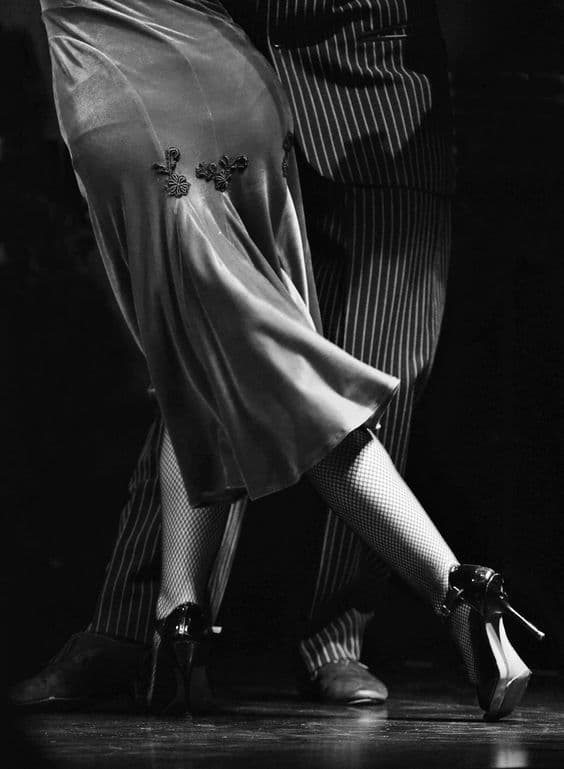
Shoes should:
- •Allow smooth turning
- •Support balance
- •Feel secure
Clothing should:
- •Allow free movement
- •Not restrict breathing or walking
Looking "like a tango dancer" is not the goal. Moving comfortably is.